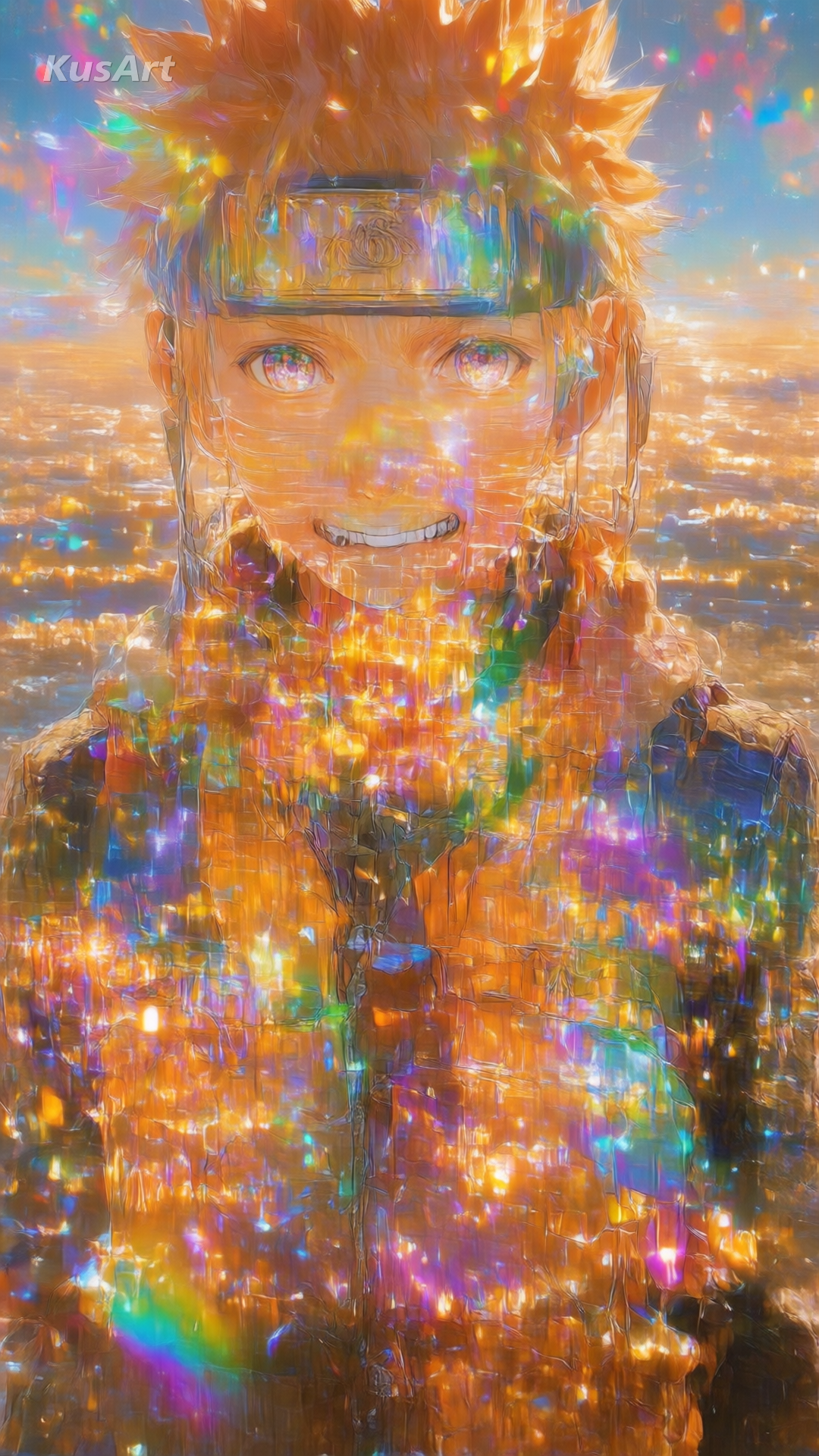
MASTERPIECE — THE WORLD OF NARUTO
Masashi Kishimoto · From the Lonely Boy to the Seventh Hokage
MASTERPIECE, BEST QUALITY, ULTRA-DETAILED CINEMATIC ANIME REALISM, SEMI-PHOTOREALISTIC ILLUSTRATION, premium Japanese theatrical anime-film aesthetics, authentic Naruto manga character design, extraordinary environmental depth, emotionally immersive storytelling, meticulous composition, physically coherent lighting, 8K-quality detail, sophisticated atmospheric cinematography.
CORE CONCEPT
Create a single monumental 9:16 vertical illustration celebrating Masashi Kishimoto and the universe of Naruto. The entire image must function as one continuous cinematic composition in which the creator stands at the heart of the world he imagined, Naruto dominates the visual narrative, the history of his journey is woven into the environment, and his birthday celebration provides the final emotional payoff.
The central message is simple: the boy who grew up alone eventually found a world full of people who believed in him.
This must look like an extraordinary Japanese theatrical anime-film key visual, not a conventional fan-art poster, not a collection of screenshots, not a multi-panel storyboard and not a collection of disconnected character portraits.
CENTRAL COMPOSITION — THE CREATOR
Position Masashi Kishimoto near the center of the composition, integrated naturally into the visual world. Use reliable photographic references for his recognizable real-world appearance. Depict him as an ordinary manga creator with understated clothing and a thoughtful, composed expression.
His presence connects the real world of manga creation with the fictional universe surrounding him. Fine ink-like contours and subtle manuscript textures transition naturally into the landscape, suggesting the creative origin of the world without turning the scene into literal floating pages.
Kishimoto is the conceptual anchor, but he must not overpower Naruto. The visual hierarchy should make the creator and his most iconic character immediately recognizable as two distinct subjects.
NARUTO — THE DOMINANT VISUAL HERO
Naruto Uzumaki is the primary emotional and visual focal point. Place him prominently in the central foreground or immediate middle ground, with a strong, instantly recognizable silhouette and authentic canonical appearance.
Preserve his original Part I identity where young Naruto appears: bright spiky blond hair, vivid blue eyes, three whisker-like markings on each cheek, youthful facial proportions and his recognizable orange-and-blue shinobi outfit.
His expression should communicate resilience, warmth and the determination to become Hokage. His pose must feel natural and cinematic rather than like a generic action-figure stance.
Subtle visual echoes of his later life may be integrated into the surrounding atmosphere, but Naruto must remain the principal character, not a small figure lost among numerous faces.
THE ENTIRE NARUTO JOURNEY — ONE CONNECTED WORLD
Build the surrounding environment as a continuous, richly layered vision of Konohagakure. Use the village rooftops, the Hokage Monument, the Academy, distant mountains, atmospheric clouds, trees and winding village streets to establish depth and spatial continuity.
Within this unified environment, weave recognizable visual references to Naruto's defining story arcs.
Near the quieter childhood portion, include the Academy swing and the emotional memory of Naruto sitting alone. Suggest his bond with Iruka and his early desire for acknowledgment through restrained environmental storytelling.
Further into the landscape, integrate the recognizable silhouettes of Team 7: Sasuke, Sakura and Kakashi. Their presence should suggest friendship, rivalry and the formative years of Naruto's journey.
In the middle-distance atmosphere, include selective visual echoes of the Chunin Exams, Gaara, Naruto's complicated bond with Sasuke, Jiraiya's mentorship and the Pain arc. A restrained Sage Mode reference, distant battle silhouettes or carefully integrated environmental details can suggest these events without creating separate framed scenes.
The larger atmospheric background may evoke the Fourth Great Ninja War through dramatic clouds, distant shinobi silhouettes and the scale of the landscape. The eventual recognition of Naruto as Hokage should be suggested through the monument, the village and the composition's sense of arrival.
Every reference must emerge naturally from the same environment. Use atmospheric perspective, overlapping silhouettes, natural terrain transitions and coherent lighting to connect the moments. The viewer should discover these story references while still reading the image as a single unified world.
Do not attempt to depict every arc with equal prominence. Select the most recognizable moments and preserve enough negative space for the principal characters to remain clear.
THE BIRTHDAY — THE EMOTIONAL RESOLUTION
Integrate Naruto's birthday celebration into the lower foreground as the warmest and most emotionally inviting part of the same continuous scene.
Naruto's friends and companions gather naturally around him, forming a coherent ensemble rather than a rigid lineup. Include recognizable characters such as Iruka, Sasuke, Sakura, Kakashi, Hinata, Shikamaru, Gaara, Rock Lee and other important members of the Naruto cast where space allows.
Preserve their canonical character designs and recognizable silhouettes. Keep faces distinct and avoid merging bodies or placing characters randomly into the composition.
A modest birthday cake, warm lanterns, gentle celebratory details and the welcoming atmosphere of Konoha establish the occasion. The celebration should feel integrated into the village environment, with characters sharing a meaningful moment rather than posing for a catalog of faces.
The birthday scene must complete the emotional progression: the lonely Academy student has become someone surrounded by friends, mentors and people who recognize his worth.
Use October 10 as Naruto's canonical birthday. Treat the celebration as the symbolic emotional culmination of his journey, not as an assertion that every depicted story event occurred on that day.
COMPOSITIONAL ARCHITECTURE
One continuous 9:16 vertical image.
Kishimoto occupies the central compositional axis. Naruto commands the primary visual attention. The surrounding village and selected story references form a natural visual pathway leading toward the birthday celebration.
Use sophisticated foreground, middle-ground and background layering. Establish strong silhouettes, natural perspective, carefully controlled scale variation and a readable hierarchy between major subjects and supporting details.
The childhood swing should be a meaningful visual echo within the larger world, not an isolated panel. The story arcs should be suggested through integrated environments and recognizable visual motifs, not individual rectangular frames.
The birthday gathering should feel physically present in the same world, connected to the village architecture and the main lighting direction.
Maintain a unified camera perspective throughout. Every character, architectural element and environmental feature must share consistent scale, atmospheric depth and illumination.
LIGHTING AND COLOR
Use a cohesive cinematic palette that naturally connects the entire image.
Soft amber sunlight, luminous pale-gold clouds, natural greens, muted orange fabric and cool blue shadows establish the nostalgic childhood atmosphere. Deeper indigo and restrained crimson accents may appear within the distant conflict references. Warm amber light and welcoming village colors become more prominent around the birthday gathering.
Use physically believable directional sunlight, realistic bounce illumination, subtle atmospheric haze, natural shadow transitions, detailed fabric response and controlled highlights.
Allow the environment to evolve tonally without introducing arbitrary lighting changes between disconnected sections. The composition should feel as though one beautiful late-afternoon sky illuminates the entire world.
RENDERING AND ART DIRECTION
Premium Japanese theatrical anime-film illustration. Faithful canonical anime character designs combined with sophisticated painterly rendering, refined linework, detailed materials, expressive eyes, believable anatomy and exceptionally rich environmental depth.
Use cinematic atmospheric perspective and controlled optical depth to separate the principal characters from the surrounding world. Preserve crisp facial features and recognizable silhouettes while allowing distant scenery to dissolve naturally into haze.
Prioritize emotional storytelling over excessive detail. Every character, light source, environmental feature and story reference must serve the composition.
STRICT NEGATIVE CONSTRAINTS
No multiple panels, no triptych, no storyboard grid, no disconnected collage, no floating character heads, no random portraits, no duplicated accidental characters, no incorrect Naruto designs, no adult proportions on young Naruto, no inaccurate facial markings, no generic fantasy architecture, no inconsistent camera perspective, no conflicting light directions, no malformed anatomy, no fused bodies, no extra fingers, no unreadable faces, no excessive bloom, no random glowing particles, no plastic skin, no oversaturated effects, no text, no logos, no watermark.
FINAL INTENT
One monumental cinematic illustration. Masashi Kishimoto at the heart of the universe he created. Naruto Uzumaki as its dominant emotional hero. His defining journey woven naturally into the surrounding world. His birthday celebration bringing the entire emotional story full circle.
The viewer should recognize Naruto instantly, discover the history of his journey within the image, and feel the contrast between his lonely beginning and the world of friends he ultimately gained.